

Parking flooring is usually noticed only when something goes wrong.
A ramp becomes slippery during rain. Tyre movement starts marking the busiest lanes. Oil leaks leave stubborn stains. A tile cracks near the turning point where vehicles put repeated pressure on the surface.
By then, changing the flooring is far more difficult than choosing it correctly in the first place.
For malls, hospitals, hotels, office complexes and residential developments, parking areas are working surfaces. They deal with vehicles, pedestrians, moisture, dirt and continuous movement every day.
That is why Full Body Vitrified Parking Tiles should be selected on performance first and appearance second.
What Are Full Body Vitrified Parking Tiles?
Full Body Vitrified Parking Tiles are dense vitrified tiles designed for flooring applications where durability, wear resistance and practical maintenance are important. In a full body tile, the colour and material composition extend through the body of the tile rather than relying only on a decorative surface layer. For parking areas, the appropriate specification should also consider thickness, surface finish, slip resistance, vehicle traffic, installation conditions and exposure.
What Should Project Teams Check Before Approving Parking Tiles?
Do not choose from a showroom sample alone. Start with traffic, load, slope, exposure and maintenance. These five factors tell you much more about whether a tile belongs in your parking area.
1. Understand How the Parking Area Will Actually Be Used
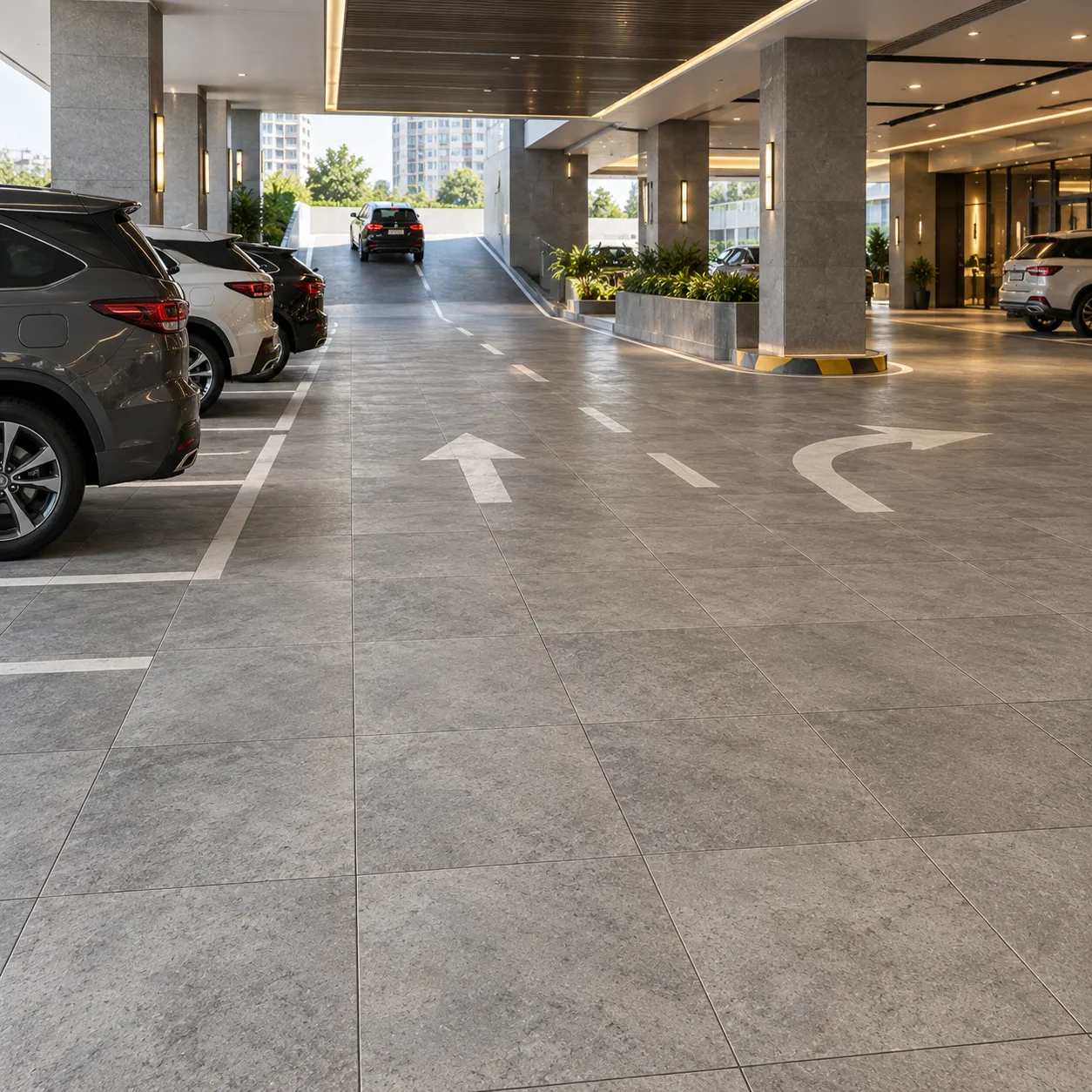
Not all parking areas experience the same pressure.
A small office basement may mainly handle cars twice a day. A shopping mall parking floor deals with continuous vehicle movement, turning, braking and pedestrian traffic.
Map the high-stress zones first:
- Entry and exit lanes
- Turning points
- Ramps
- Drop-off areas
- Loading zones
- Frequently occupied bays
These areas usually need more attention than lightly used corners.
Full body vitrified parking tiles are particularly relevant because their colour and composition run through the tile body, making wear and minor surface damage less visually contrasting than in products with only a decorative top layer.
2. Thickness Should Match the Load
Here is where “one tile for the entire project” can become a costly shortcut.
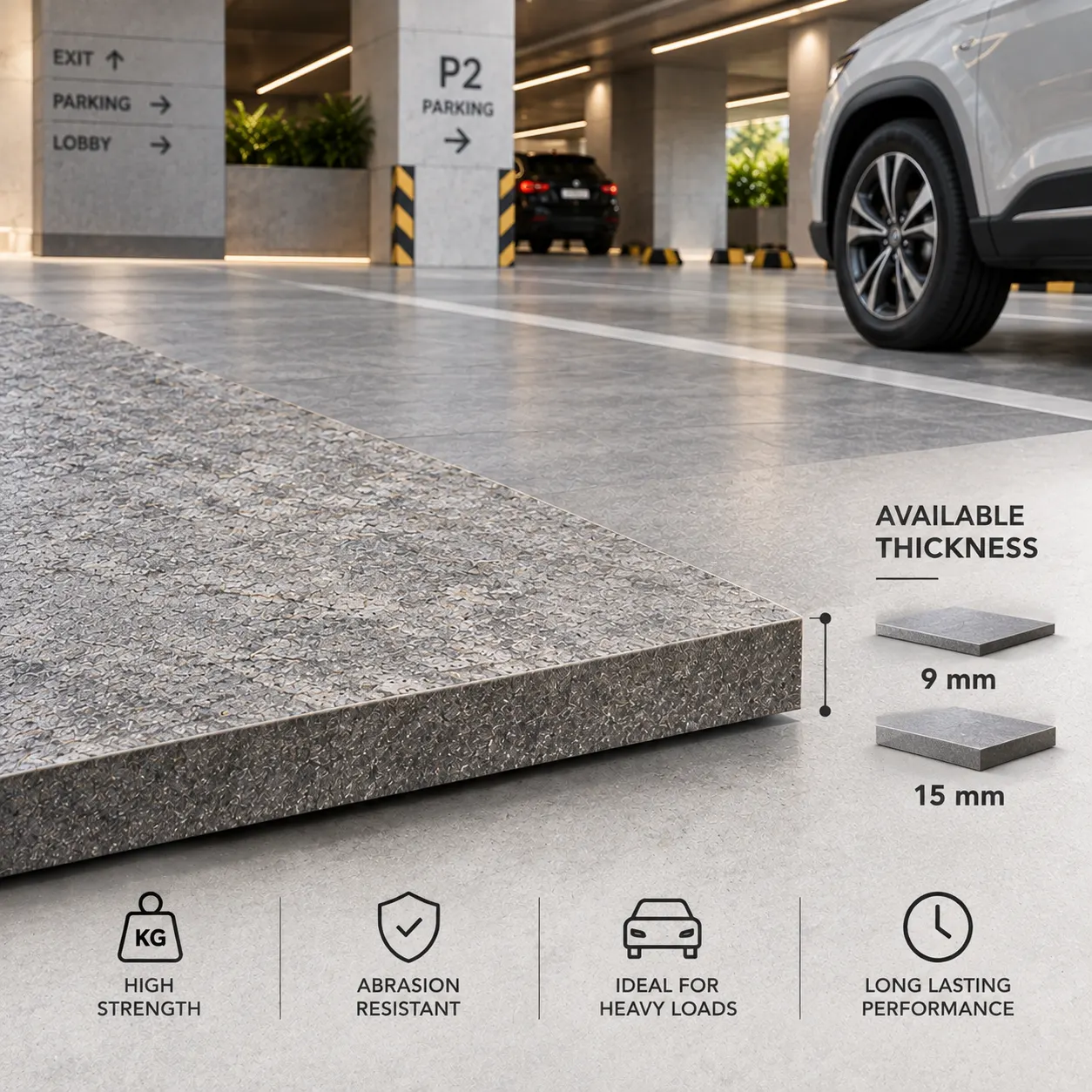
Parking tiles are available in different thicknesses because different areas face different levels of stress.
Choose full body parking ranges that include 9 mm and 15 mm options, with the 15 mm format positioned for heavier traffic and demanding exterior applications.
Before specifying, ask:
- What vehicles will use the area?
- Passenger cars?
- SUVs?
- Light commercial vehicles?
Higher-load environments may justify a more robust specification. Thickness should be selected with the substrate, installation system and actual operating conditions, not simply price.
3. Grip Matters More Than Gloss
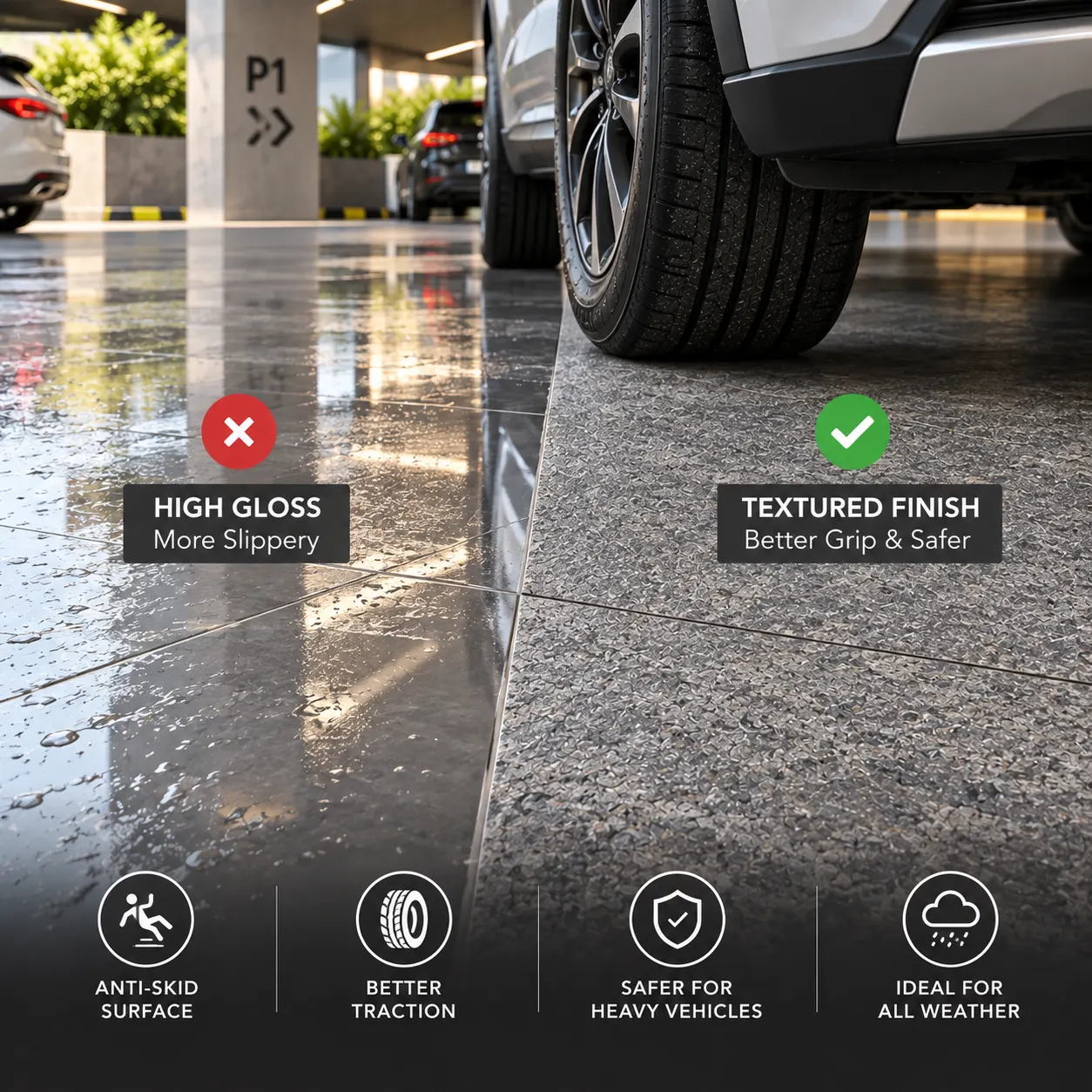
A parking floor has to perform when it is wet. Rainwater enters open parking areas. Cars carry moisture into basements. Oil and dirt can appear around bays and service areas.
That makes surface grip a key consideration, especially on ramps and turning zones.
Parking-specific full body vitrified tiles are commonly offered in matt and textured finishes, while anti-skid variants are designed for areas where additional traction is required.
The lesson is simple:
Do not choose parking flooring because it shines beautifully under showroom lighting. Choose it for how confidently people and vehicles can move across it.
4. Check Water, Oil and Stain Resistance
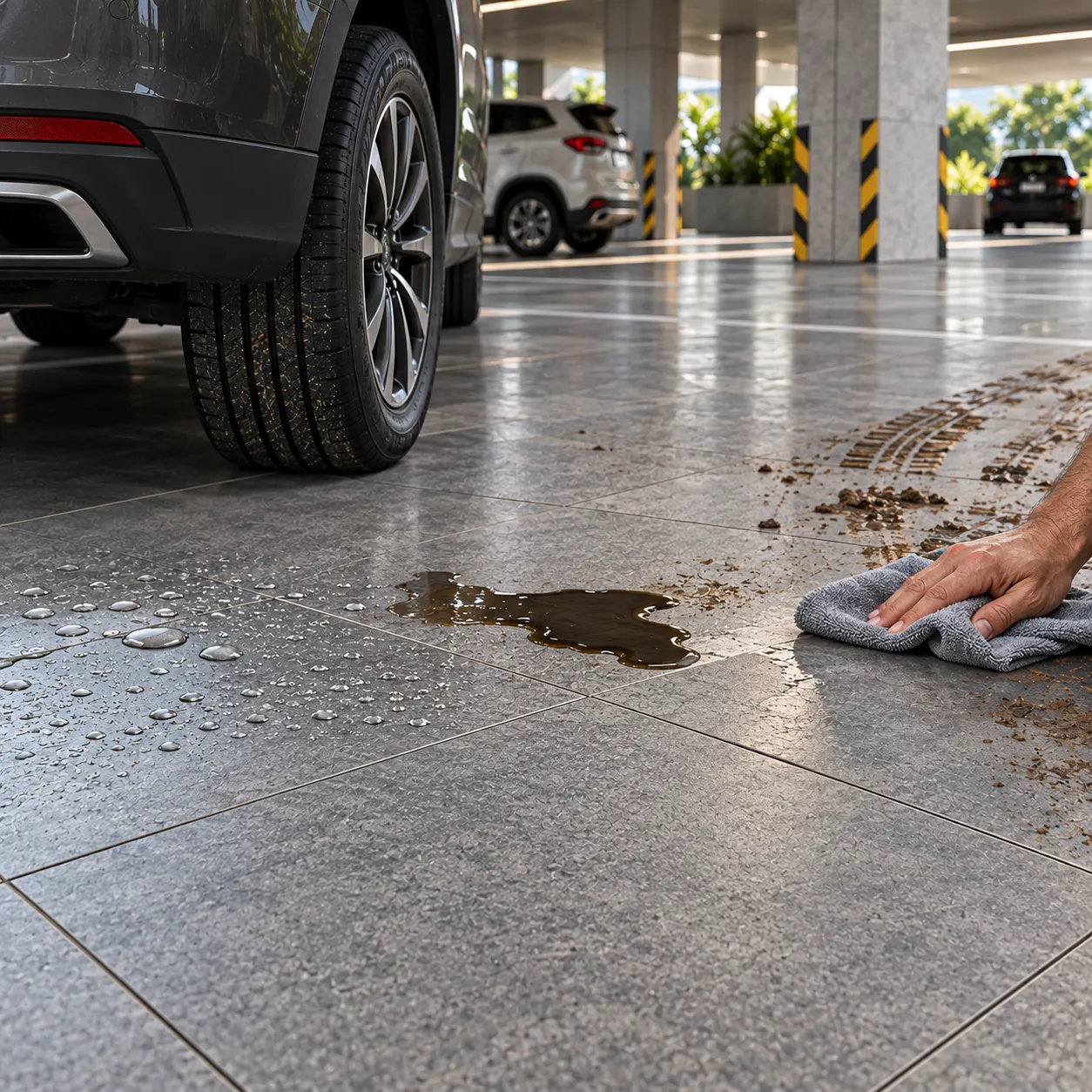
Parking areas are messy by nature.
- Oil drips
- Dust settles
- Tyres bring mud
- Open areas face rain
If the surface absorbs moisture or stains easily, maintenance teams inherit the problem.
Full body vitrified parking products are dense, with water absorption below 0.5%. Their non-porous character also helps with oil, dirt and regular cleaning.
For facility teams, that can mean simpler day-to-day upkeep.
But maintenance still matters. Regular sweeping and cleaning with water and mild detergent are recommended rather than allowing dirt and spills to build up.
5. Do Not Forget Design
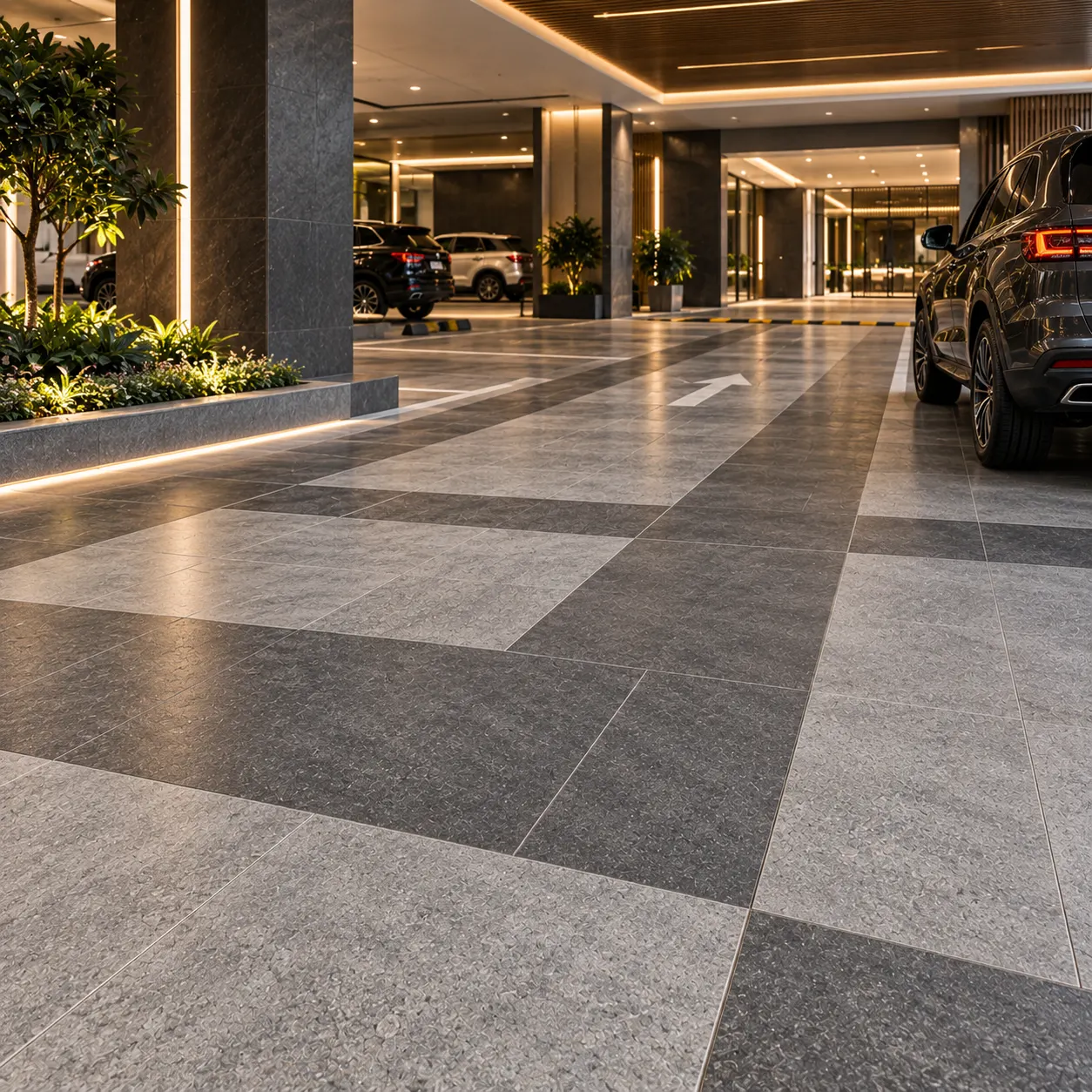
Parking is functional. It does not have to look unfinished.
Think about the entrance to a premium office tower or luxury hotel. The parking area may be the first part of the property a visitor experiences.
Modern parking tiles are available in multiple neutral, stone-inspired and darker colour directions. Full body tile ranges include options such as Biscuit, Butter, Cadbury, Snow White, Stone Black, Tan and Wine.
Using coordinated shades can also help distinguish:
- Driving lanes
- Parking bays
- Pedestrian zones
- Entrance areas
Good design can improve both appearance and visual organisation.
How Should Project Teams Compare Parking Tile Specifications?
| Factor | What to Check | Why It Matters |
| Tile construction | Full body composition | Helps manage visual impact of wear/damage |
| Thickness | Available thickness options | Should match application and installation |
| Surface finish | Matt/textured/anti-skid | Important for grip and appearance |
| Slip resistance | Relevant product/test data | Particularly important on ramps and wet zones |
| Water absorption | Manufacturer specification | Relevant to moisture exposure |
| Wear resistance | Abrasion/test performance | Important for repeated traffic |
| Breaking strength | Product technical data | Relevant to expected loads |
| Size | 600×600, 600×1200 etc. | Influences layout and installation |
| Maintenance | Cleaning requirements | Impacts lifecycle upkeep |
| Shade/design | Colour and finish options | Helps organise parking areas |
Why Choose Famous Vitrified Tiles?
For commercial projects, product variety matters, but consistency and experience matter more. Famous Tiles brings 30+ years of tile-industry experience and specialises in full body, anti-skid and exterior flooring solutions.
Our Full Body Vitrified Parking Tile range offers:
- 600×600 mm and 600×1200 mm sizes
- 9 mm and 15 mm thickness options
- Matt finishes for parking applications
- Heavy-duty, load-bearing construction
- Stain, wear and weather resistance
- Anti-skid options for demanding zones
- Multiple colours and surface choices
Specify the Parking Floor Before It Becomes a Maintenance Problem
Commercial parking flooring should handle vehicles, weather and everyday mess without becoming the facility manager's next recurring complaint. Choose the tile according to load, grip, thickness, exposure and maintenance requirements from day one. Contact Famous Tiles for current pricing, technical details and project-specific recommendations for Full Body Vitrified Parking Tiles.
Frequently Asked Questions
Full Body Vitrified Parking Tiles are dense vitrified tiles in which the colour and material composition extend through the tile body. They can be considered for parking areas where wear resistance, maintenance and long-term appearance are important considerations.
They can be suitable for car parking areas when the tile's thickness, strength, surface finish, slip performance and other technical specifications match the expected traffic and installation conditions.
There is no universal thickness for every parking project. The choice should consider vehicle loads, traffic, substrate, installation conditions and the manufacturer's technical specifications. Different projects may require different thickness options.
Slip resistance is particularly important in areas exposed to water, including ramps and outdoor parking. The appropriate surface finish and available slip-resistance data should be evaluated for the specific application.
They can be considered for ramps when the selected product has appropriate surface characteristics and the ramp is properly designed for drainage, slope and installation. Slip performance should be checked before specification.
Regular sweeping and cleaning can help remove dust, dirt and spills. Oil or other stains should be addressed promptly using cleaning methods appropriate for the tile and grout.
Full Body Vitrified Parking Tiles are dense vitrified tiles in which the colour and material composition extend through the tile body. They can be considered for parking areas where wear resistance, maintenance and long-term appearance are important considerations.
They can be suitable for car parking areas when the tile's thickness, strength, surface finish, slip performance and other technical specifications match the expected traffic and installation conditions.
There is no universal thickness for every parking project. The choice should consider vehicle loads, traffic, substrate, installation conditions and the manufacturer's technical specifications. Different projects may require different thickness options.
Slip resistance is particularly important in areas exposed to water, including ramps and outdoor parking. The appropriate surface finish and available slip-resistance data should be evaluated for the specific application.
They can be considered for ramps when the selected product has appropriate surface characteristics and the ramp is properly designed for drainage, slope and installation. Slip performance should be checked before specification.
Regular sweeping and cleaning can help remove dust, dirt and spills. Oil or other stains should be addressed promptly using cleaning methods appropriate for the tile and grout.
 Previous Blog


